



Industry Activities
2026 Annual Fastener Industry Leader Interview: Brighton-Best International(BBI)

Add to my favorite
2026-11-23
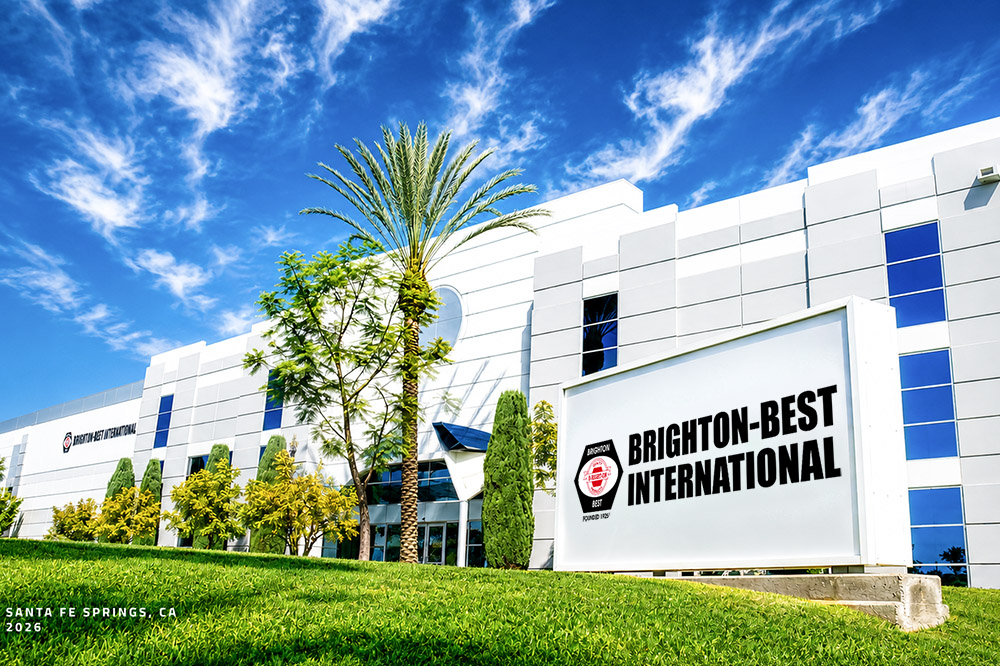
As 2026 draws to a close, this year has represented far more than simply another cycle of ups and downs for the global fastener industry. It has been a year of significant shifts in the industry landscape. As we look back on 2026 and ahead to 2027, we believe that some voices deserve particular attention from the global industry. This is why Fastener World Magazine is featuring a special “Annual Fastener Industry Leader Interview” in this Yearbook. We invited BBI— the U.S. fastener wholesale giant— to this exclusive interview who shared first-hand observations of the market changes in 2026, as well as forward-looking perspectives on the global market, supply chains, and industry development in 2027 for the global fastener community.
Interview with President Jun Xu, Brighton-Best International (BBI)
About BBI
“BBI is one of the largest wholesalers of fasteners in the world. We operate out of the USA / Canada / Australia / New Zealand / UK / Brazil. Our core product range is fasteners; however over the last several years, we have diversified significantly into a wide range of industrial supplies from PPE to Hand Tools, and general industrial consumables.
BBI aims not just to be one of the biggest, but more importantly to us, the best wholesaler in the world for industrial products. It is extremely difficult to be both the biggest and the best. The two ideas often conflict, and rarely is the biggest also the best of anything. However, we will continue to strive each day to find the balance and to achieve this goal.”
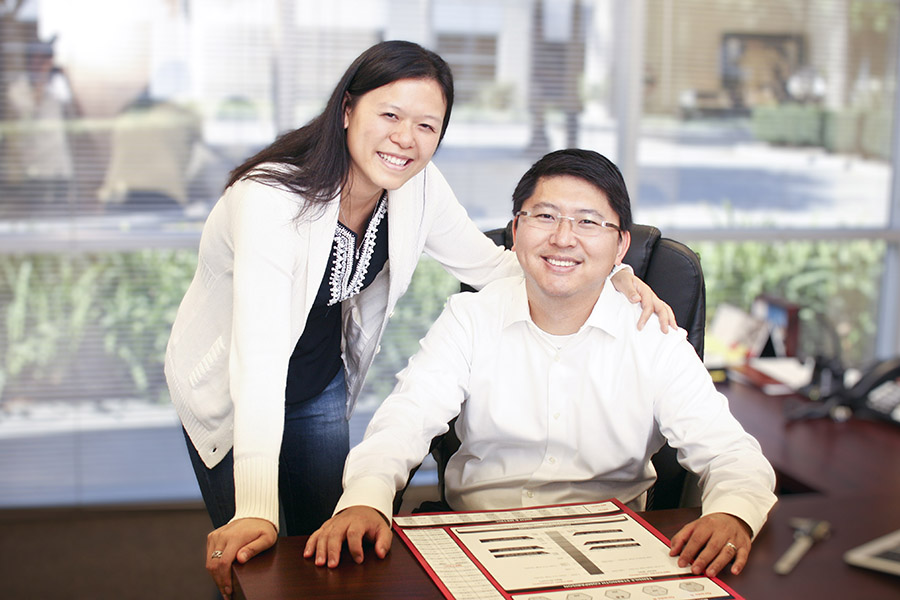 (Right: President Jun Xu; Left: Peggy Hsieh)
About President Jun Xu
“I’m currently the President of BBI. Both my wife and I have been with BBI for 18 years and have been with the company since the acquisition of the business in 2008, led by Ta Chen International and a group of investors. Prior to Brighton Best, we both worked in the finance and management consulting industries. Brighton Best has a history that stretches back over 100 years. The first Brighton store was established in 1925 in Cincinnati, Ohio. Our vision for the business is simple. As much as we have relied on the work of our predecessors to bring us to where we are today, we will work as the predecessors to our future leaders of the company to ensure the company lasts for another 100 years.”
BBI’s Insight: In an Unstable World, Stability & “Closer to Your Customer” is the New Value.
Q1. Looking back at the past years, what major developments have reshaped the global fastener industry, and how do these changes compare with those of the previous 5 years?
A: “The industry has changed dramatically over the last 5 years. If you think of 2020 as the dividing line and look back 5 years before and after 2020, the changes from 2020-2026 versus 2015 – 2020 are many times greater. Since 2020, we have seen COVID which depressed demand, then the COVID surge, followed by trade wars (tariffs), another middle east war that disrupted logistics and oil prices, and now Artificial Intelligence which has the potential to change everything. From 2015 – 2020, all I can remember being focused on were steel costs and exchange rates. As we look forward, we believe that this pace of change will not only continue, but accelerate.”
Q2. Before 2020, cost efficiency and predictable delivery were key considerations in global sourcing. How has the underlying logic of supply chain management changed, and what does the transition from Just in Time (JIT) to Just in Case (JIC) mean for the fastener industry?
A: “Before 2020, I would say the world’s supply chain model could be described as Just in Time (JIT). In JIT, distance didn’t matter, efficiencies did. As long as the costs and quality were the best, and the delivery lead times were predictable, the factory or the country with the best cost and lead times could predictably win the orders. The ultimate goal of JIT was to have the most efficient supply chain possible from production to consumption. The underlying assumption of a JIT model however is stability and predictability. Demand forecasting, supply capacity, ocean freight logistics, geopolitics, everything had to be stable so that accurate planning can be done. However, as we can see post 2020, the world has been anything but more stable. Today, we are impacted by geopolitics, tariffs, logistics insecurity, high fuel costs to just name a few.”
Q3. As supply chain security and resilience become increasingly important, how should fastener suppliers respond to the rise of JIC? Beyond cost, quality, and delivery, what additional value can manufacturers offer to help customers manage uncertainty?
A: “If we look at the world after 2020, the best model to describe the global supply chain today is Just in Case (JIC). In a JIC world, events are not as predictable. In this world, price is not as important as stability. Friend shoring / near shoring becomes an important trend to reduce the risk. Manufacturing is increased domestically to ensure we have both domestic capacity and domestic knowledge to produce critical parts. The ultimate goal of JIC is to create a world of greater stability by increasing redundancies and supply chain security - at the expense of cost. Change can be painful, but change is also an opportunity. In a new JIC world, I would encourage suppliers to ask what other values can you provide to your customers. In addition to cost / quality / delivery, another value is insurance. What can you do as a manufacturer to provide greater insurance and stability to your customers? The greater the stability that can be provided, the greater the value in that relationship.”
Q4. AI is advancing rapidly and is increasingly influencing business and industry. From your perspective, how does AI work at a fundamental level, and what can its mechanics tell us about both its potential and its limitations?
A: “AI is a fast-evolving field. To understand AI, it’s helpful to understand AI’s mechanics. Fundamentally, AI is a math algorithm. The function of this algorithm is to provide the highest probability of giving you the best answer. Think of an input (the question), it’s algorithm (the neural network), and the answer (the best guess). From the best guess, it asks the user to provide a reaction (good reaction or bad reaction), and it feedbacks that reaction back into its algorithm to refine its future answers. An AI neural network today can have over 1 trillion connections. Our human brain has about 400 trillion connections. An AI neural network is digital and runs on electricity. Our human brain is biochemical, and runs on metabolic chemistry. However, just because we know the mechanics of a human brain (the number of neural connections and the chemistry delivering energy to our brains), we do not know how we develop our personalities, how we store our memories, or how we have emotions. If mechanically we are all very similar, then why are we all so very different? This is similar to AI today, where we mechanically understand how it works, but we don’t really understand “how” it works.”
Q5. AI can process enormous amounts of information, but its effectiveness depends on the data available. Where do you see AI delivering the greatest benefits, and why might human specialists still have an advantage in fields that require highly specialized knowledge?
A: “The reality of today’s AI is that because it is looking for the highest probability of a correct answer, it can probably deliver a very good answer if it has a large dataset to study from. For example, a family doctor. AI will probably become a better family doctor than most family doctors because a human family doctor can only rely on his/her education and limited lifetime of experiences. An AI family doctor can research all of medical history, all historical patient history, and provide a more comprehensive diagnosis on common illnesses. However, AI is probably not going to be a very good medical specialist. If you have a rare disease without a lot of research data, AI is probably not going to provide a very good diagnosis because there is simply not enough data for it to study to provide an accurate diagnosis. Here, a human specialist is likely a better option.”
Q6. AI can make knowledge more accessible and help people solve problems across a wide range of fields. When it comes to fasteners, however, how should companies balance the benefits of AI with the need for specialized industry knowledge and expert verification?
A: “The reality of today’s AI is that AI can make everyone a B average student in every subject matter. This is great, especially if you have never done something before (like fixing your garage door), AI can probably give you very good suggestions of how to fix your problem or refer you to someone who can fix your problem. However, if you want to be an A level student in any field, it requires specialized knowledge. Fasteners are critical components. In the case for fastener and the specialized knowledge in our industry, it is best to have a human expert checking and verifying AI responses rather than relying on AI as an end solution.”
Q7. Business has always involved connecting markets, countries, and cultures. Against a backdrop of growing geopolitical uncertainty, inflation, and higher business costs, how do you see the nature of global business relationships changing over the next decade?
A: “Business is and will always be about building bridges. It is about connecting countries, cultures, peoples, to appreciate differences and find commonality. From those difference are the opportunities. Think of how many businesses are taking something popular in one part of the world and starting it in another, for example, Boba tea in the US, Starbucks in Asia, etc… Over the next decade however, the pace of change will increase. Geopolitical insecurity will increase, along with higher cost of business due to inflation and interest rates. It will likely be harder, and certainly more expensive to build these bridges.”
Q8. In an increasingly uncertain business environment, what should fastener companies prioritize to strengthen customer relationships, maintain competitiveness, and position themselves for future growth? What opportunities do you see emerging for the industry?
A: “If this is the environment we will operate in, it is more important than ever to be closer to your customers. Having strong and long-term partnerships will become more important, not less important. Overcommunicate what you are seeing and what you are needing. Work to find compromise. Increase your value proposition by providing greater stability when the world is less stable. The opportunities are out there, and the pace of change will likely mean increase in demand for fastener products.”
Brighton-Best International
BBI
USA
fastener
screw
PPE
hand tool
industrial consumables
distributor
President Jun Xu
大國鋼
美國
扣件
螺絲
個人防護裝備
手工具
工業用消耗品
經銷商
總經理
扣件
國際展會
惠達雜誌
匯達實業
外銷媒合
廣告刊登
螺絲五金
五金工具
緊固件
台灣扣件展
印度新德里螺絲展
越南河內螺絲展
墨西哥瓜達拉哈拉螺絲展
美國拉斯維加斯螺絲暨機械設備展
2027美國鳳凰城螺絲暨機械設備展
波蘭克拉科夫螺絲展
義大利米蘭螺絲展
德國司徒加特螺絲展
德國杜塞道夫線材展
Fastener
Hand Tool
Hardware
Component
Fastener World
Wire Dusseldorf
Fastener Fair India
Fastener Fair Vietnam
Fastener Fair Mexico
Fastener Poland
Fastener Fair Italy
IFE
Fastener Fair Global


READ NEXT
Industry Activities
2026-10-14

Subscribe
